
OBD Code Decoder: Translate Car Error Codes Instantly
That check engine light doesn't come with a translation guide. It just glows, and now you're stuck guessing whether it's a five-dollar sensor or a five-hundred-dollar repair. An OBD code decoder closes that gap. It takes the cryptic code your car is throwing and turns it into plain English, so you know what's wrong before you spend a dime on a diagnosis.
What Is an OBD Code Decoder and How Does It Work?
Every car built after 1996 runs an OBD-II system, On-Board Diagnostics, second generation. It's a network of sensors watching your engine, transmission, and emissions systems. When something falls outside normal range, the system logs a code and lights up your dashboard.
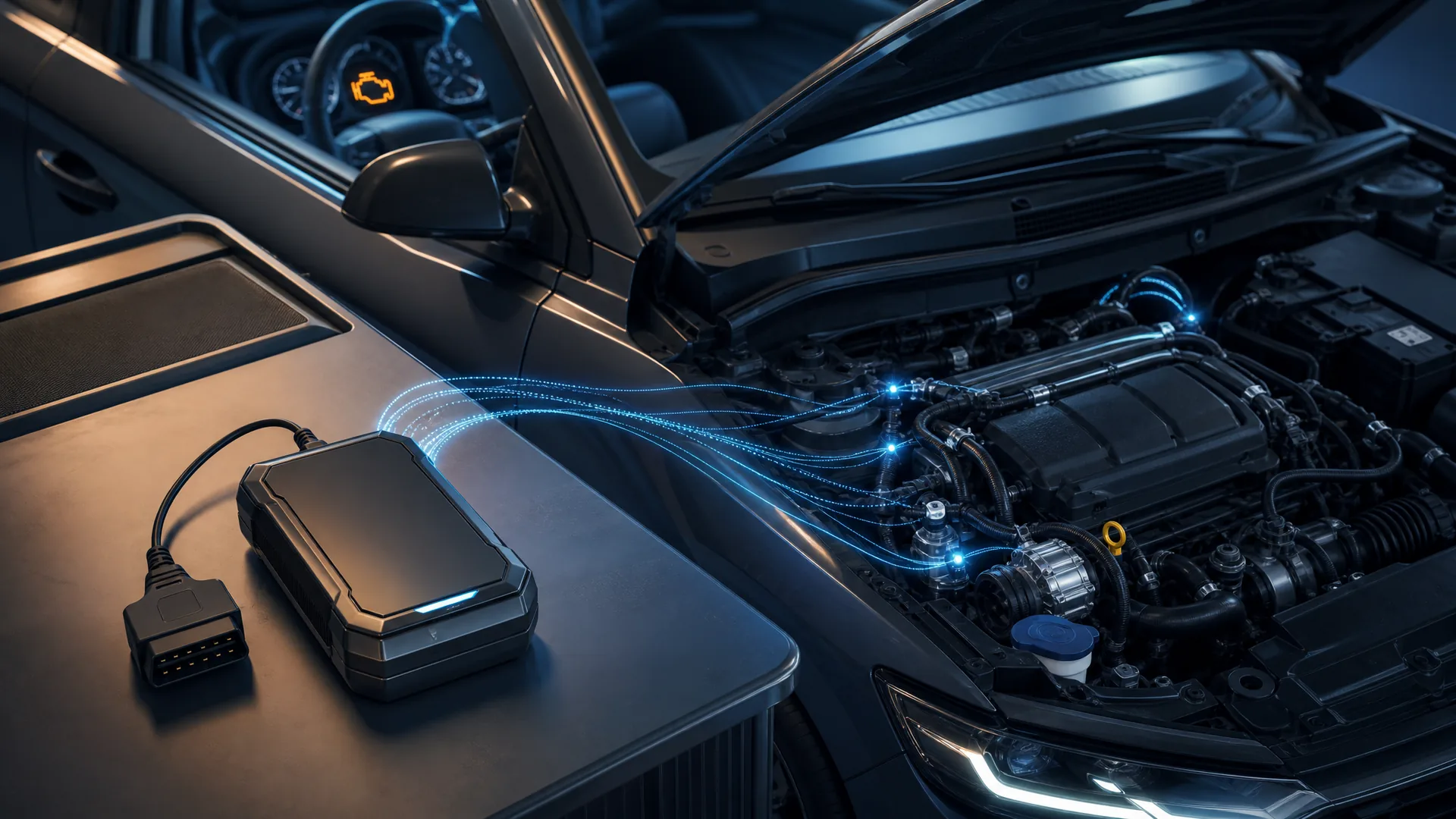
An OBD code decoder translates that stored code. You pull the code with a reader, then run it through the decoder, which matches it against a database and tells you what system is affected and roughly how serious it is. Without a decoder, a code like P0420 is just a string of letters and numbers. With one, it becomes "your catalytic converter isn't working as efficiently as it should."
Why Your Check Engine Light Turns On
The light itself doesn't distinguish between minor and major problems. A loose gas cap can trigger the same steady glow as a failing oxygen sensor. The light gives no clue whether the fix is cheap or costly, which is exactly why check engine lights are among the most common reasons drivers search for a nearby repair shop right away instead of waiting it out.
How to Read Car Error Codes in Under a Minute
You don't need a mechanic's toolbox to read car error codes yourself. The process takes less time than pumping gas.
Tools You Need to Pull a Code
You'll need an OBD-II scanner, sometimes called a code reader. These plug into a port usually located under the dashboard, near the steering column. Basic handheld versions cost relatively little and work on any OBD-II compliant vehicle, which covers nearly every car and light truck sold since the late 1990s. Bluetooth adapters that pair with a smartphone app are another common option. Many auto parts stores will also pull the code for free if you don't own a reader.
Using an Auto Diagnostic Code Lookup Tool Online
Once you have the code, plug it into an auto diagnostic code lookup tool instead of guessing based on a forum thread. A good lookup tool does more than spit out a definition. AutoGnome's OBD code decoder cross-references your code with average repair costs pulled from the Repair Estimator, so you see both the diagnosis and the likely bill in one step. That's the difference between knowing a code's name and knowing what to actually do about it.
Common OBD2 Diagnostic Codes List and What They Mean
Some codes show up far more often than others. Here's a short OBD2 diagnostic codes list covering the ones you're most likely to see:
P0300, Random or multiple cylinder misfire detected.
P0171, System too lean, meaning the engine is getting too much air or too little fuel.
P0455, Evaporative emission system leak, often something as simple as a loose gas cap.
P0420, Catalytic converter efficiency below threshold.
P0420 Code Meaning Explained
The P0420 code meaning trips up a lot of drivers because it sounds alarming. In plain terms, a P0420 code, one of the most common check engine light triggers, usually points to a catalytic converter efficiency issue rather than an immediate breakdown risk. Your car isn't about to strand you on the highway because of it. But it shouldn't be ignored indefinitely, since a failing catalytic converter can eventually affect emissions compliance and fuel efficiency.
Other Frequent Check Engine Light Codes
Not every code is as straightforward as P0420. Generic codes like P0300 (random misfire) can stem from anything between worn spark plugs and a failing ignition coil, which is why a plain code list often isn't enough to act on. P0171 might mean a vacuum leak, a dirty mass airflow sensor, or a failing fuel pump. The code narrows down the system, but it rarely names the exact broken part on its own.
From Code to Repair Cost: What Will It Actually Cost You?
Decoding the code answers "what's wrong." It doesn't answer "what will I pay." That's a separate question, and it depends on more than the three or four characters on your scanner screen.
Why the Same Code Can Mean Different Prices
Two drivers can pull the exact same P0420 code and end up with wildly different bills. One might need a simple oxygen sensor replacement. The other might need a full catalytic converter swap, which involves more labor and pricier parts. Labor rates also swing by region and by shop, so a code alone can't tell you what to budget.
This is where it pays to estimate your repair cost before booking a shop. Running your decoded code through a repair estimator gives you a realistic price range based on the actual issue, your vehicle, and typical labor costs in your area, before a mechanic ever looks under the hood.
What to Do After You Decode Your OBD Code
Once you know what the code means and roughly what it'll cost, the next question is timing. Can this wait until the weekend, or do you need to pull over now?
When It's Safe to Drive vs. When to Stop
A steady check engine light usually means the issue is worth addressing soon but isn't an emergency. You can typically keep driving to work or to a shop appointment. A flashing check engine light is different. It usually signals an active engine misfire that could damage your catalytic converter if you keep driving. If your light is flashing, reduce speed and get to a shop as soon as possible rather than waiting it out.
Finding a Trusted Shop Near You
Once a code is decoded, AutoGnome routes drivers straight to nearby, reviewed repair shops that handle that specific issue, closing the loop from dashboard light to booked appointment. Instead of searching blindly for "mechanic near me" and hoping for the best, you go in already knowing the likely diagnosis, the expected cost range, and a shop with a track record for that repair.
OBD Code Decoder FAQs
What does an OBD code decoder actually do? It translates the code your car's computer stores into a plain-English explanation of what system is affected, so you're not left guessing at a string of letters and numbers.
How do I read my car's error codes without going to a mechanic? Plug an OBD-II scanner into the port under your dashboard, note the code it displays, then run that code through an online lookup tool to see what it means.
Can I find out how much a repair will cost just from the code? Not from the code alone, since severity and labor rates vary. But pairing the decoded code with a repair estimator gives you a realistic cost range before you book anything.
Is it safe to keep driving with a check engine light on? A steady light usually means you can drive to a shop soon without immediate risk. A flashing light means stop and get it checked right away to avoid further engine damage.
What's the difference between OBD and OBD2 diagnostic codes? OBD was the original, less standardized diagnostic system used before the mid-1990s. OBD2 diagnostic codes follow a universal format required on virtually all cars and light trucks sold since 1996, making them readable by any compliant scanner.